Cycad diseases and pests
Each pest and each disease is listed on its own, with the symptoms and the control measures. Information supplied by Dr A J Cilliers.
Pests
Information supplied by Dr A J Cilliers.
Zerenopsis leopardina
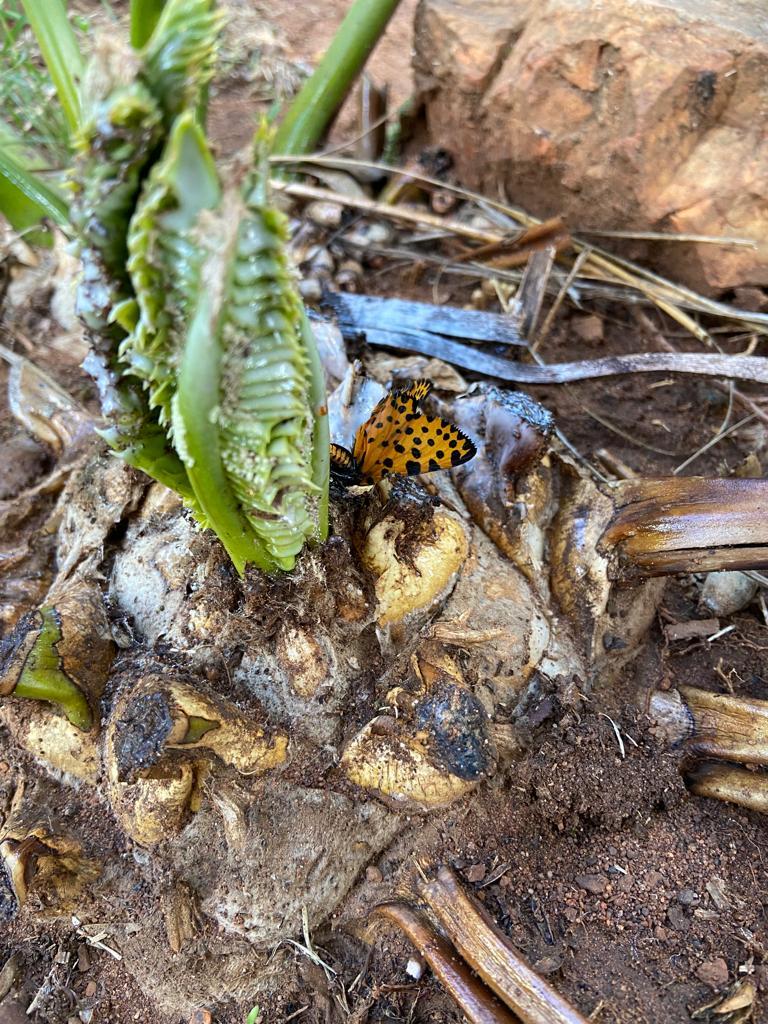
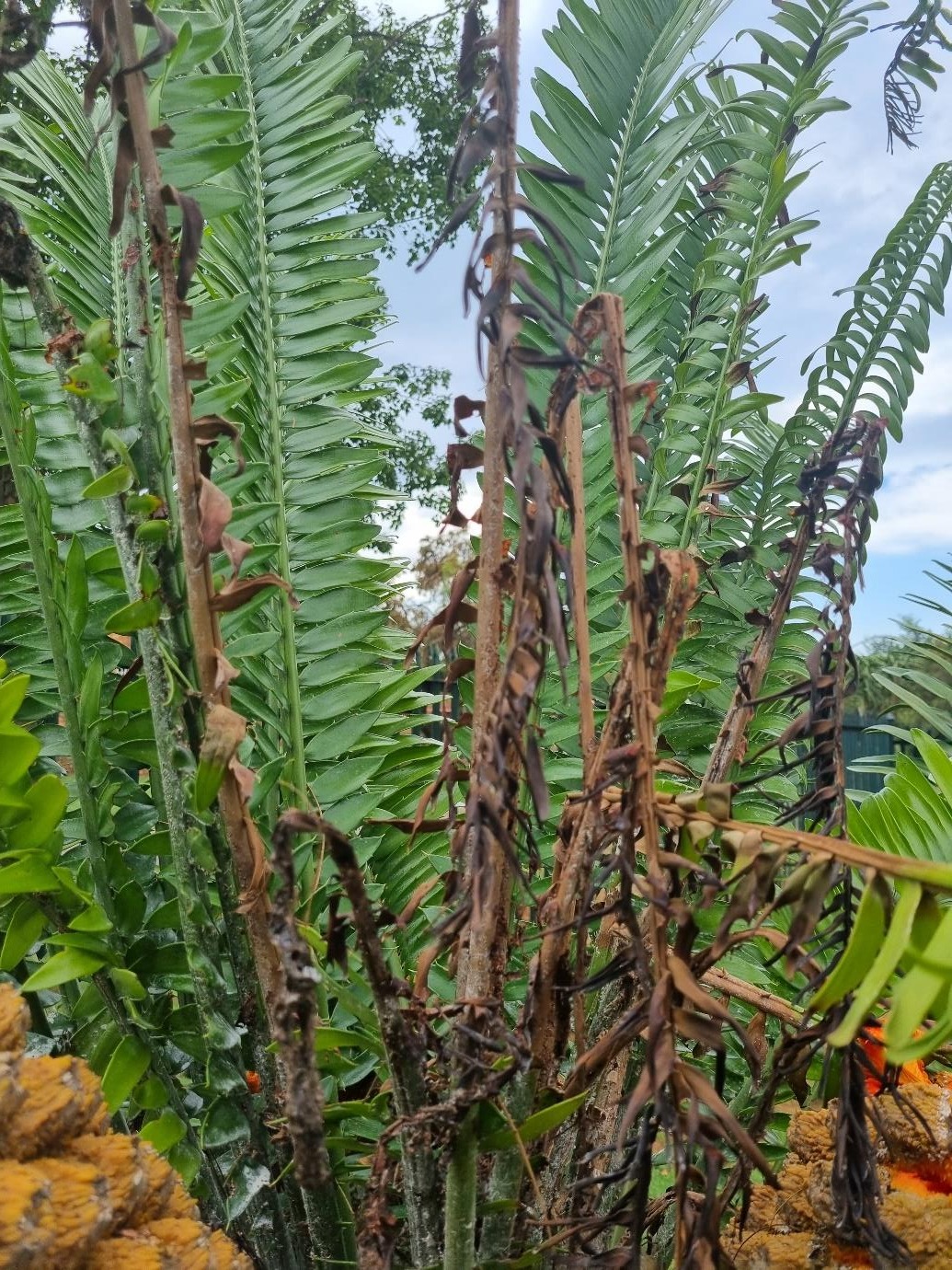
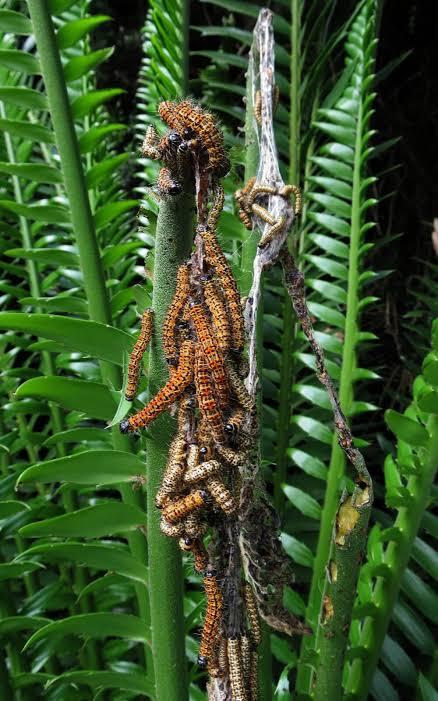
Zerenopsis leopardina, commonly known as the cycad leopard moth, Leopard Magpie Moth, Pied Leopard Moth or, in Afrikaans, Luiperdmot is a species of moth in the family Zygaenidae. It is found in parts of Africa, including Kenya, Tanzania, Uganda, South Africa and Ethiopia.
The cycad leopard moth is named for its close association with cycad plants. The larvae of this moth feed on the leaves of cycads, especially soft newly formed leaves. The adult moth has a wingspan of about 3-4 cm and the orange wings are coloured with black spots.
The moth in question is Zerenopsis leopardina, otherwise known as the Leopard Magpie Moth, Pied Leopard Moth or, in Afrikaans, Luiperdmot. This day-flying moth has bright orange wings decorated with neat black markings. It is indigenous to the coastal fringe of KwaZulu-Natal and Mozambique, and further inland in Zimbabwe. It has since spread widely, and is now in Mpumalanga, Limpopo and the northern parts of Gauteng, possibly having spread from infected plants being brought into the region. It also appears to have travelled south of its KwaZulu-Natal habitat.
The adult moth (it is a day-flying moth) lays eggs in cycad leaves. Usually on soft emerging leaves. Within a day or two the larvae hatch, and begin to feed on the cycad leaves. They go through about 4 larval instars, before they fall to the ground and pupate. The damage they cause as larvae is extremely devastating and an entire flush of new leaves can be destroyed in a matter of days. They seem to have no preference for the cycad genus, and damage has been observed on Cycas, Encephalartos, Lepidozamia and other genera.
Control
The most effective means of control is to dust soft leaves with either Blue death or Karbadust. It is preferable not to spray new leaves with a liquid insecticide, but some collectors have found this to be effective, and use products such as cypermethrin. Systemic products such as Koinor should also work, but these are only effective once feeding has begun.
Be sure to use products with a registration for garden use.
Information supplied by Dr A J Cilliers.
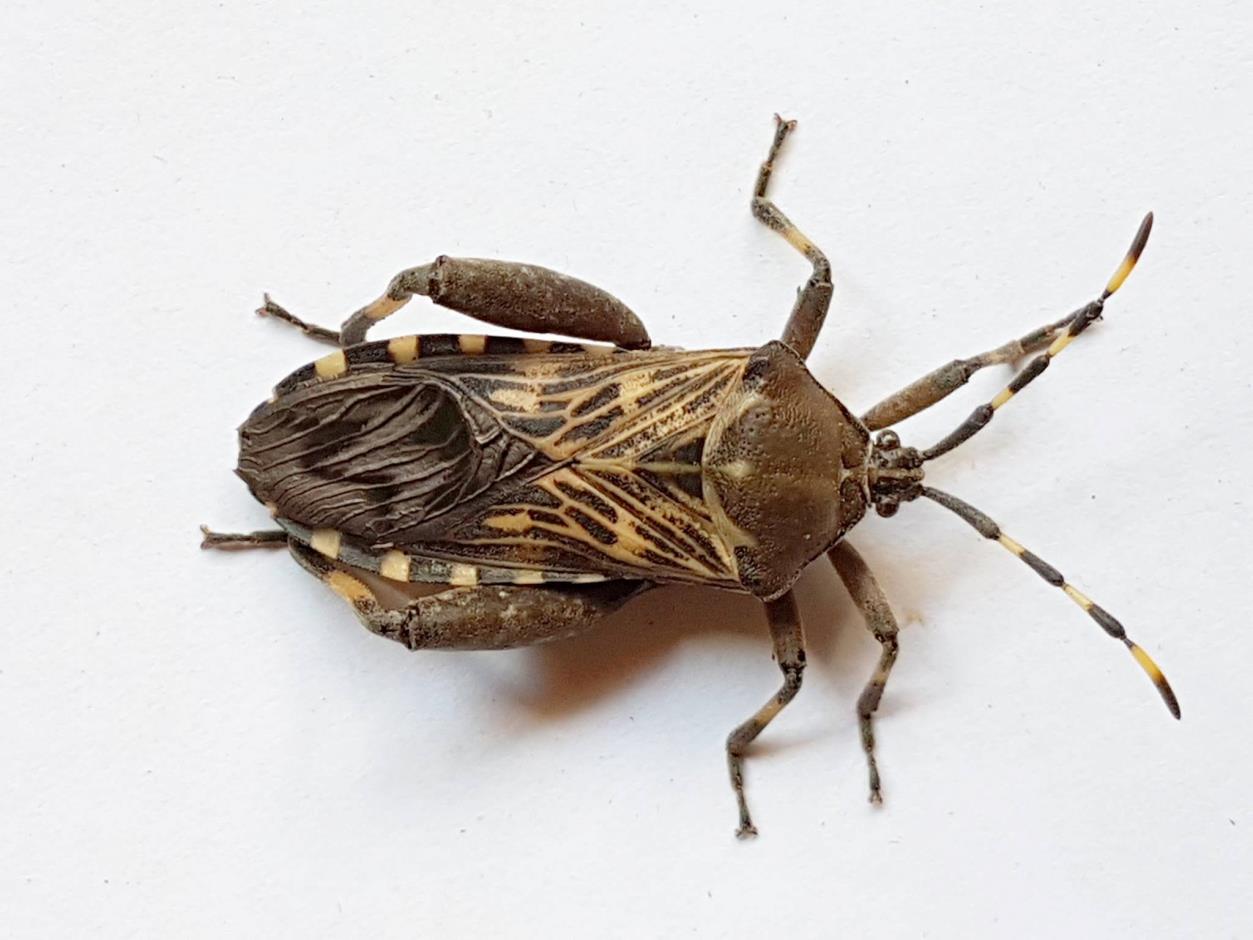
Twig wilter damage is not very common, and usually only affects one new leaf. The twig wilter is a member of the bug family (homoptera) and feeds by sucking sap from a host plant. In the case of cycads, this also happens when leaves are soft and emerging. The new leaf turns black from the point of the feeding, and ‘flops down’. The entire leaf eventually aborts. In the case of a seedling this is very destructive, since one only gets one or two new leaves per season.
Control
This is also a case that contact insecticides would work best, and where prevention is better than cure. Blue Death or Karbadust again the best options. Once the bug has fed on the leaf, the damage is done, so systemic products will not prevent this.
Information supplied by Dr A J Cilliers.
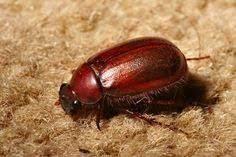
The Christmas beetle is more annoying than an actual pest. They come out early in the evening in the warm summer months, and also feed on soft cycad leaves. Damage is typical feeding damage, which could be attributed to any chewing insect. In certain seasons they can out in large numbers, and cause substantial damage.
Control
This is also a case that contact insecticides would work best, and where prevention is better than cure. Blue Death or Karbadust again the best options. Once the bug has fed on the leaf, the damage is done, so systemic products will not prevent this.
Information supplied by Dr A J Cilliers.
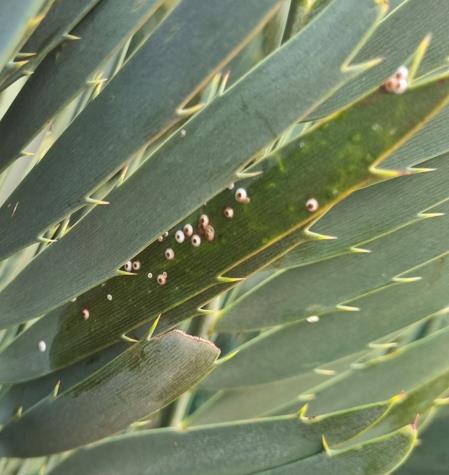
Aphids, scale insects and woolly aphid all infest cycads. Green or black aphids one infest soft new leaves, where they can cause substantial damage until the leaves harden off. Often aphids are associated with ants, who live symbiotically with them and feed on the honeydew that the aphids excrete.
Control
All aphids and lice are sap-sucking insects. Systemic control is therefore most effective. A systemic product is a product that is absorbed either by the roots or the leaves and moves within the plant via the sap. Any insect feeding on the sap, will therefore be controlled. Chewing insects will also be reasonably effectively controlled. Many collectors like to use soft options such as Oleum (mineral oil) or even soap water. Mineral oil smothers the aphids (especially scale) while soap dries the insect out by desiccation. Chemical control is best achieved with one of the neonicotinoid insecticides. Thiamethoxam (Trade name: Actara) has a cycad registration. The other effective neonicotinoid is imidacloprid (Trade names Confidor and Koinor). Like Actara, these are soil applied as a drench and absorbed by the roots. Always make sure the product you use has a garden registration.
Information supplied by Dr A J Cilliers.
Dopluis
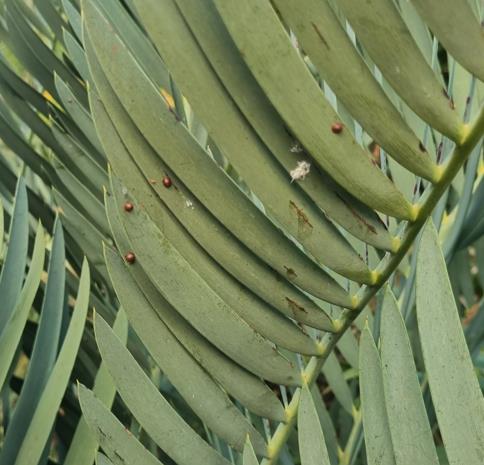
Scale insect (dopluis in Afrikaans) is the biggest problem of these three. They can completely colonize a leaf and cause serious damage. They tend to spread reasonably quickly from leaf to leaf, and if not controlled the entire leaf turns yellow, and photosynthetic ability id severely affected.
Control
All aphids and lice are sap-sucking insects. Systemic control is therefore most effective. A systemic product is a product that is absorbed either by the roots or the leaves and moves within the plant via the sap. Any insect feeding on the sap, will therefore be controlled. Chewing insects will also be reasonably effectively controlled. Many collectors like to use soft options such as Oleum (mineral oil) or even soap water. Mineral oil smothers the aphids (especially scale) while soap dries the insect out by desiccation. Chemical control is best achieved with one of the neonicotinoid insecticides. Thiamethoxam (Trade name: Actara) has a cycad registration. The other effective neonicotinoid is imidacloprid (Trade names Confidor and Koinor). Like Actara, these are soil applied as a drench and absorbed by the roots. Always make sure the product you use has a garden registration.
Information supplied by Dr A J Cilliers.
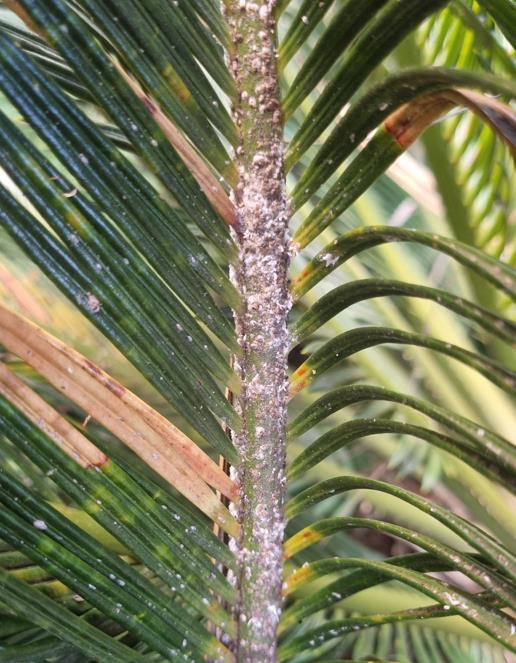
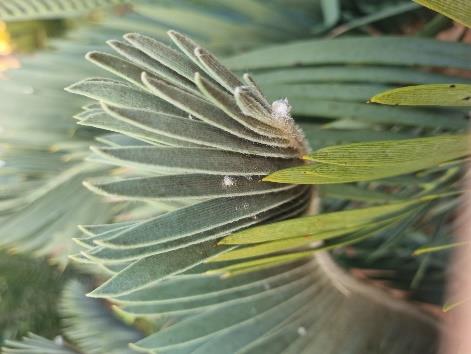
Woolly aphid is more unsightly than problematic. They, like aphids suck the sap of the plant. Generally they don't do much harm, but can cause damage if not controlled.
Control
All aphids and lice are sap-sucking insects. Systemic control is therefore most effective. A systemic product is a product that is absorbed either by the roots or the leaves and moves within the plant via the sap. Any insect feeding on the sap, will therefore be controlled. Chewing insects will also be reasonably effectively controlled. Many collectors like to use soft options such as Oleum (mineral oil) or even soap water. Mineral oil smothers the aphids (especially scale) while soap dries the insect out by desiccation. Chemical control is best achieved with one of the neonicotinoid insecticides. Thiamethoxam (Trade name: Actara) has a cycad registration. The other effective neonicotinoid is imidacloprid (Trade names Confidor and Koinor). Like Actara, these are soil applied as a drench and absorbed by the roots. Always make sure the product you use has a garden registration.
Information supplied by Dr A J Cilliers.
Stem borer
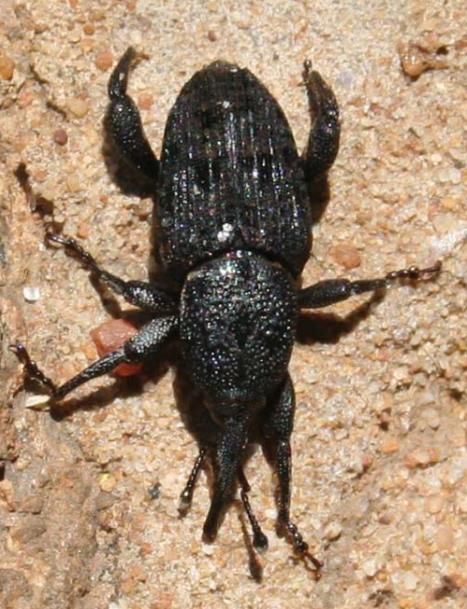
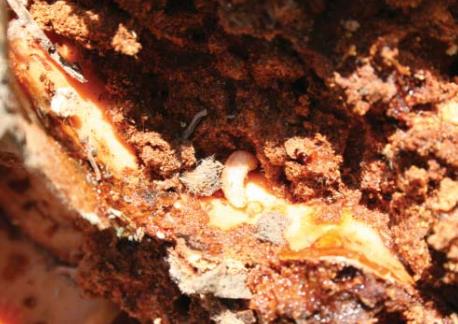
Information on borer beetles is sketchy and incomplete. I have observed two different weevils (snout beetles) that damage cycads. The first is the stem borer. It seems to bore into the stem to lay eggs, which then hatch taking with them fungus which causes rot to the soft inner caudex.
Control
I have found effective control with both systemic and contact insecticides. Imidacloprid (Trade names Confidor and Koinor) remain excellent to control cycad insect pests. Contact insecticides such as cypermethrin are also effective, but have to be applied more often onto the cone and the plant itself.
Information supplied by Dr A J Cilliers.
Horse-nose cycad weevil
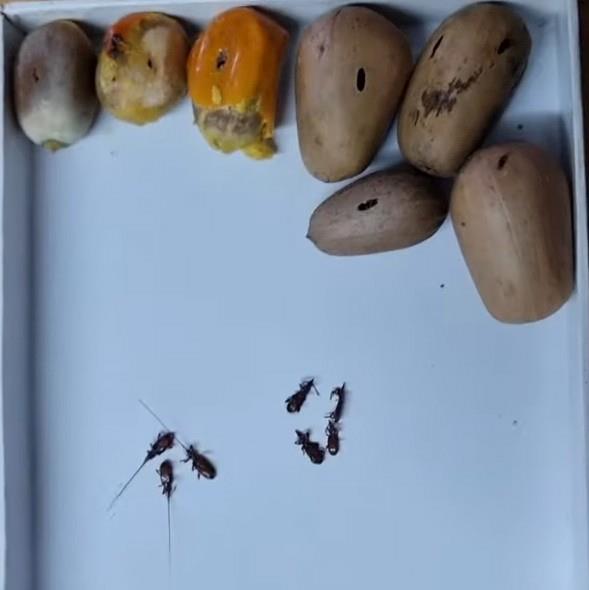
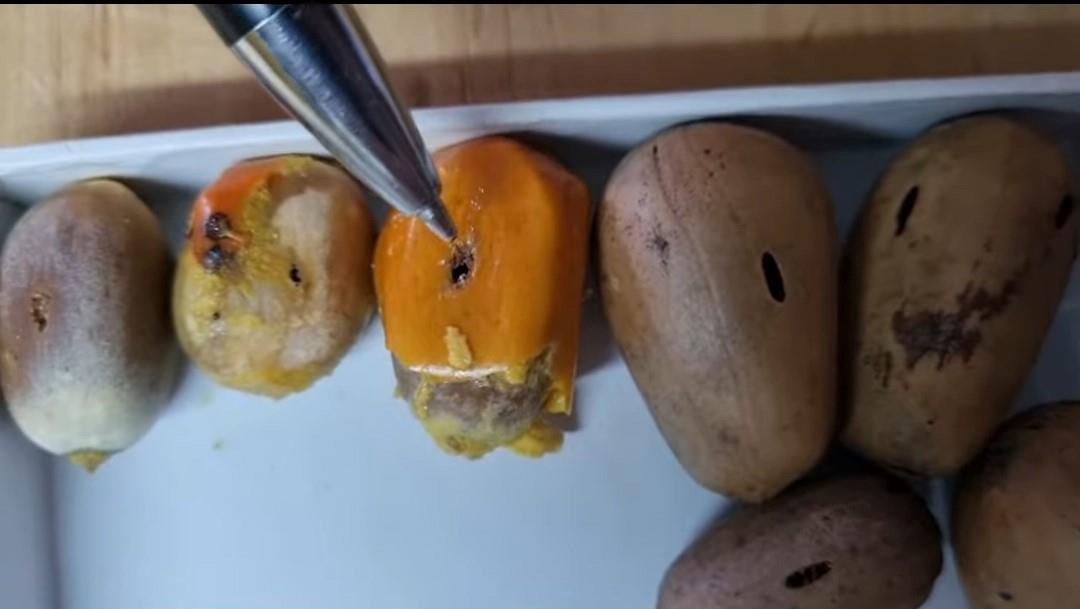
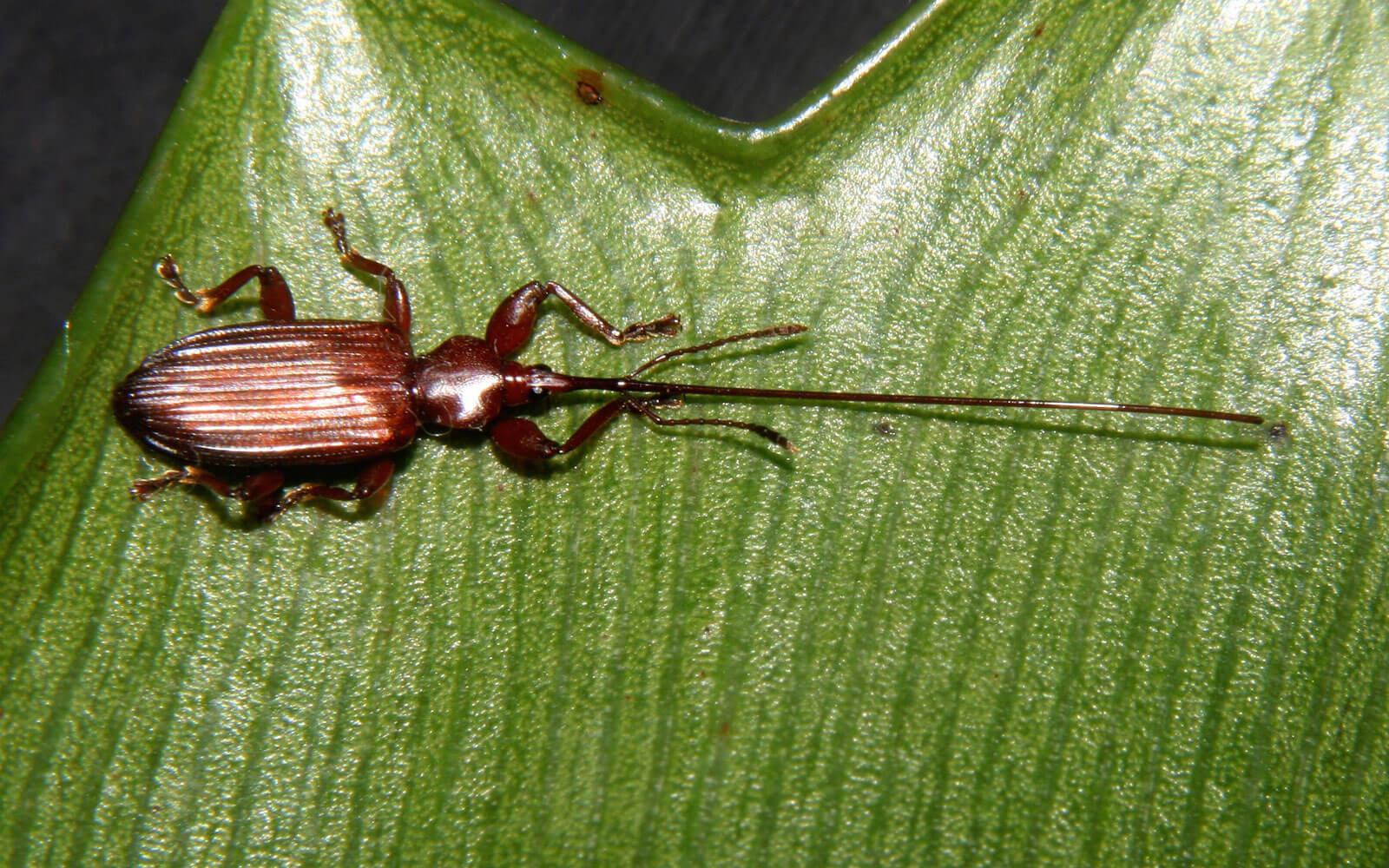
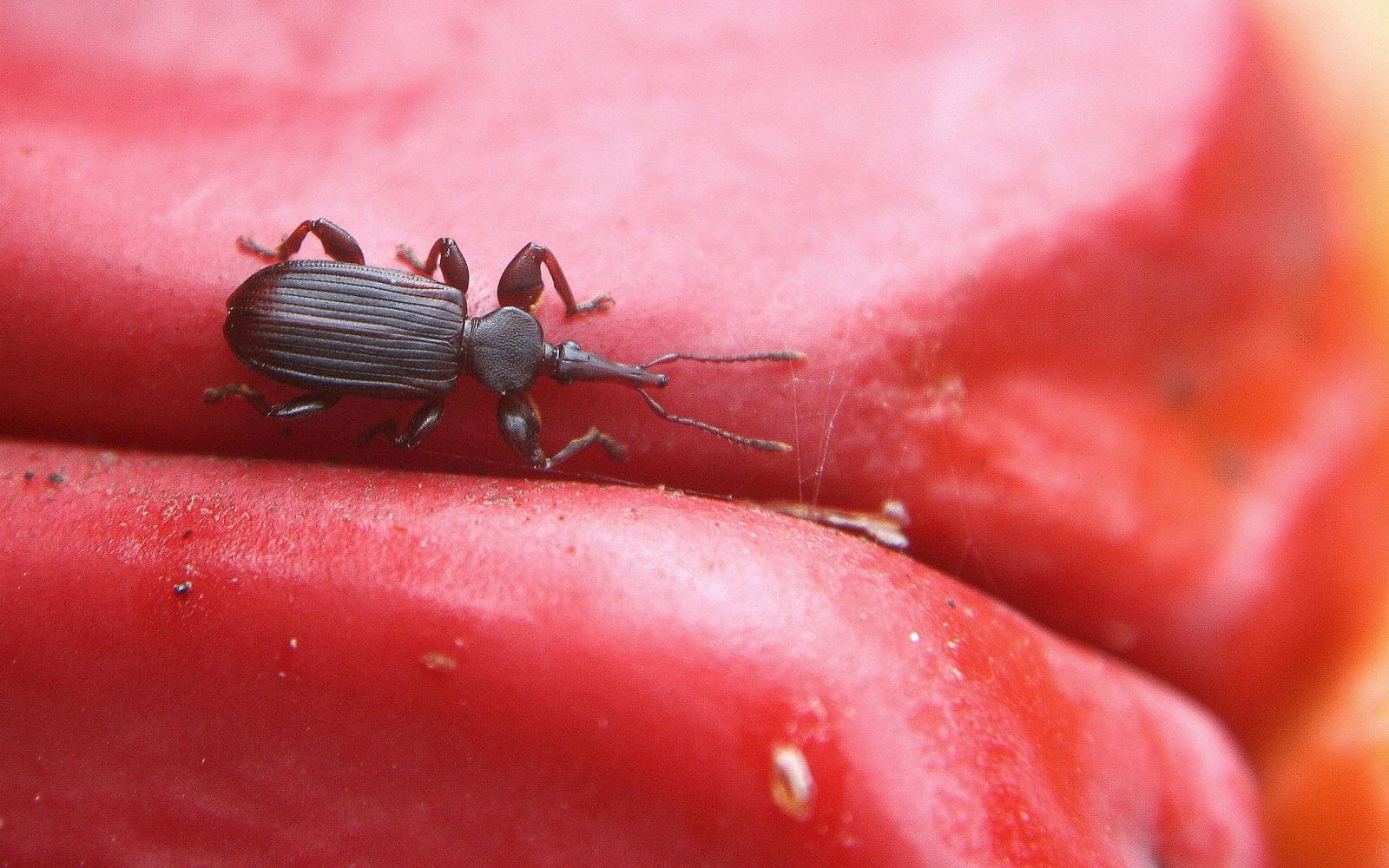
The other is the horse-nose cycad weevil or seed weevil with its ridiculously long snout (in the case of the female), it penetrates the seed sarcotesta and the seed sclerotesta (the hard shell) and lays eggs inside the seed. The punctured seed cannot develop any further and the seed is ruined.
Control
I have found effective control with both systemic and contact insecticides. Imidacloprid (Trade names Confidor and Koinor) remain excellent to control cycad insect pests. Contact insecticides such as cypermethrin are also effective, but have to be applied more often onto the cone and the plant itself.
Information supplied by Dr A J Cilliers.
Diseases and disorders
Information supplied by Dr A J Cilliers.
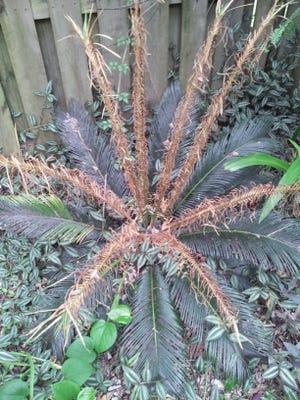
This is a problem that is becoming more and more prevalent in South Africa. It was initially observed along the Cape coast, but is now being seen inland also.
Symptoms
Frizzle top occurs mainly on Cycas revoluta. A flush of leaves dries out completely, sometimes leaving a reasonably unaffected previous set of leaves. This is unsightly and an entire season is lost.
Control
The problem with frizzle top is that one never knows that it is coming, until it is too late. The problem is caused by caused by a deficiency of manganese (Mn). The best course of action is therefore to fertilize the cycad annually with a fertilizer high in Mn, especially in sandy soils.
Information supplied by Dr A J Cilliers.
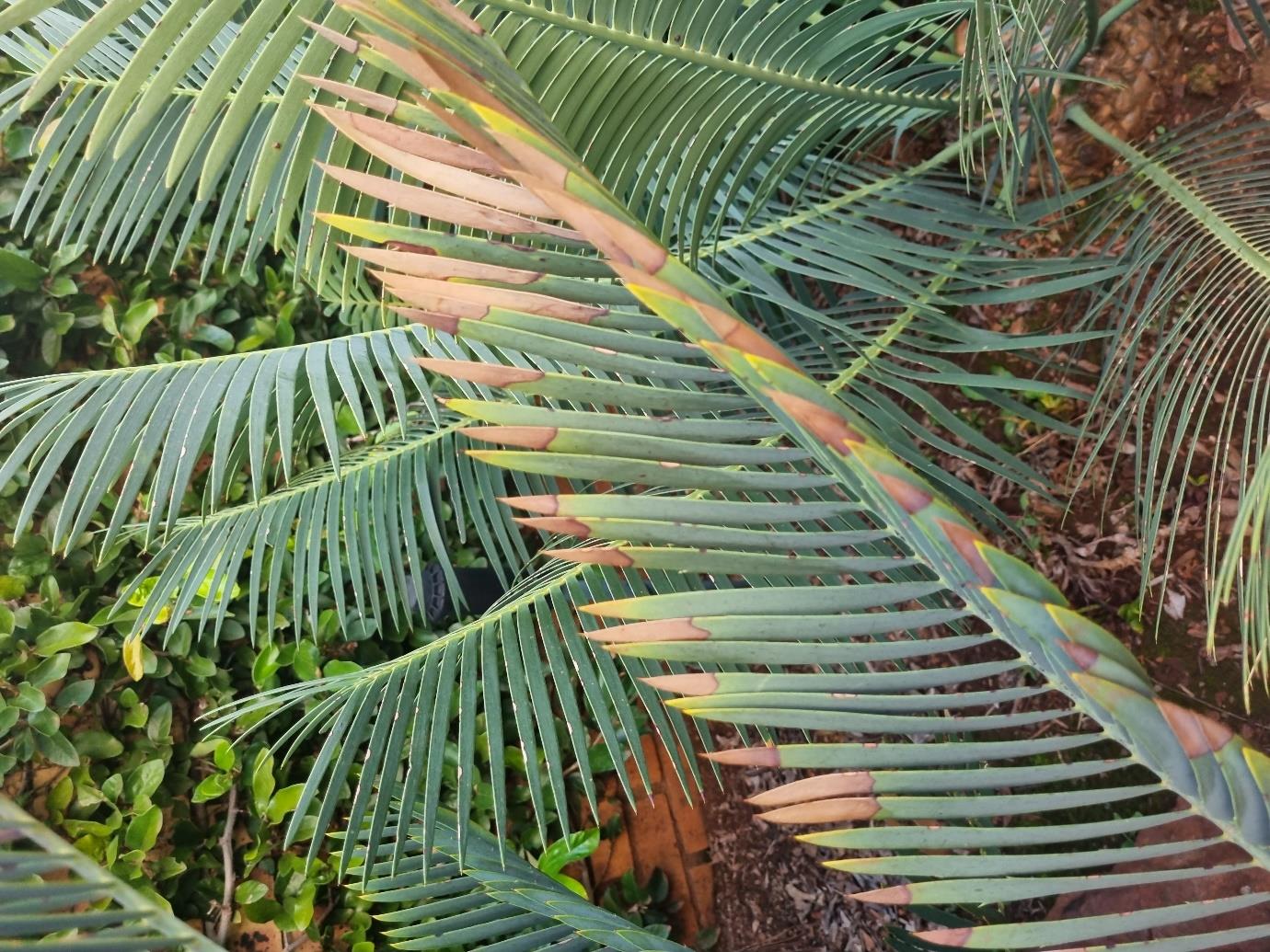
Potted cycads (particularly) sometimes show signs of nutrient deficiency. The symptoms of such deficiencies often look very similar. Yellowing of leaves can be caused by an iron (Fe) deficiency, or a nitrogen (N) deficiency also. Fertilization of cycads is therefore important, especially potted cycads where all nutrients will eventually be removed from the soil over time.
It is also important not to confuse old leaves with nutrient deficiency. Cycad leaves can persist on a plant for 3 years or more. By that time the plant begins to draw nutrients from old leave to feed a new flush. This is seen in Encephalartos latifrons for example.
Tip dieback of leaves may also be cause by too much watering, especially in potted plants. Always make sure your plants drains well.
Information supplied by Dr A J Cilliers.
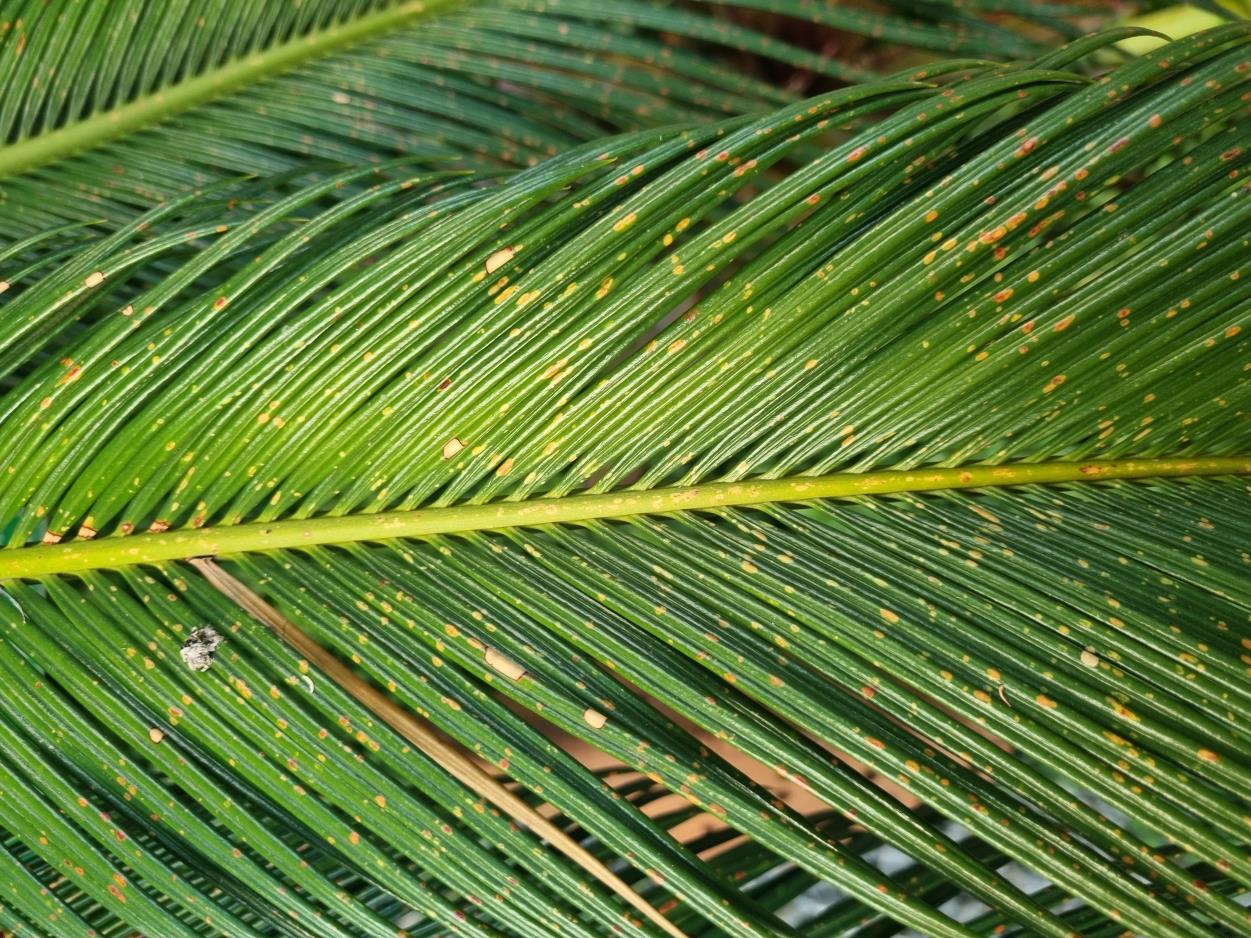
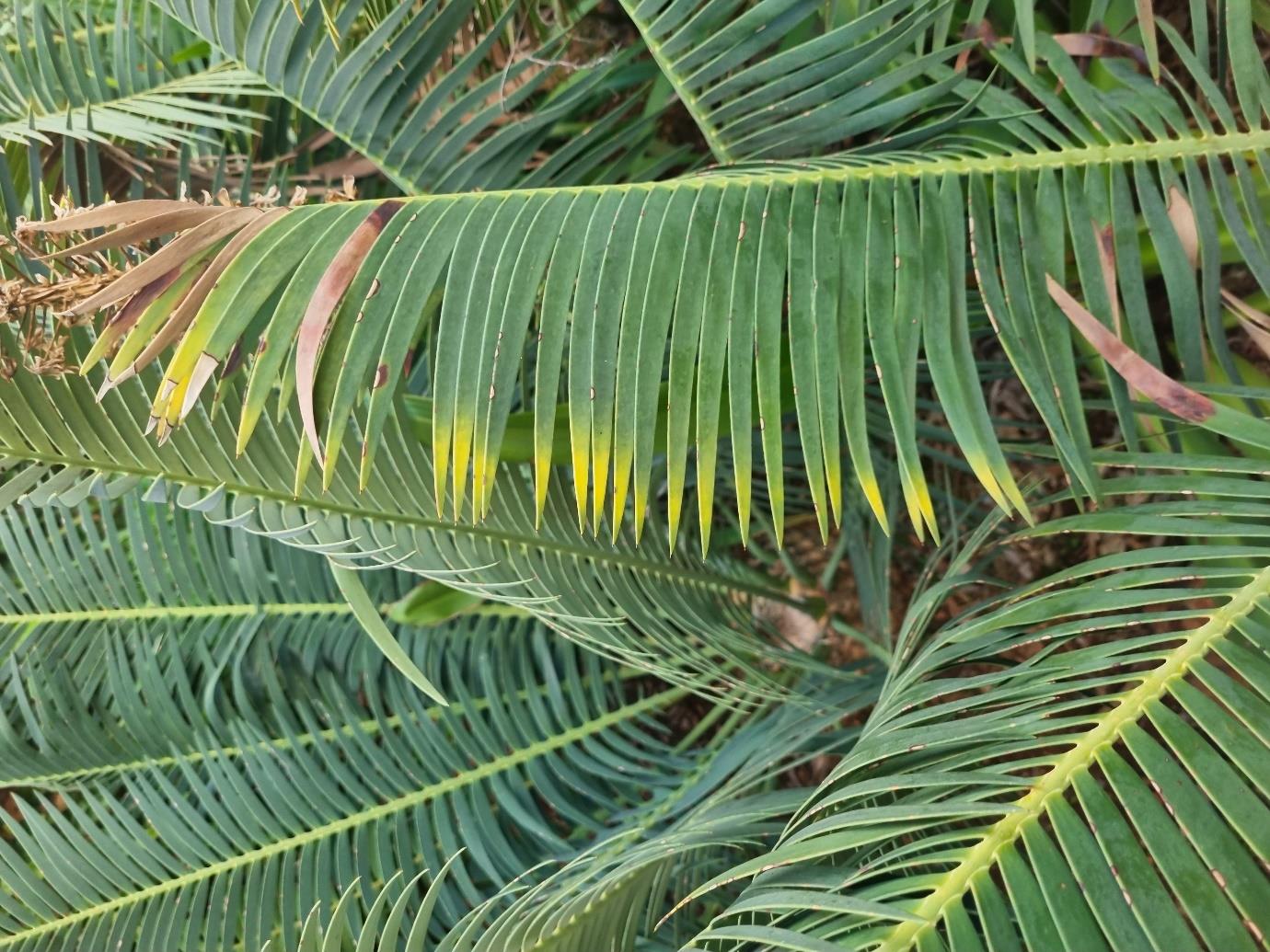
Probably the question most of then asked about cycads is yellow spots on Cycas revoluta leaves. The answer to this is physical damage, either by hail or aphids on the underside of the leaves. Obviously nothing can be done about hail. If the cause is aphids, refer to the section on aphid control.
Information supplied by Dr A J Cilliers.
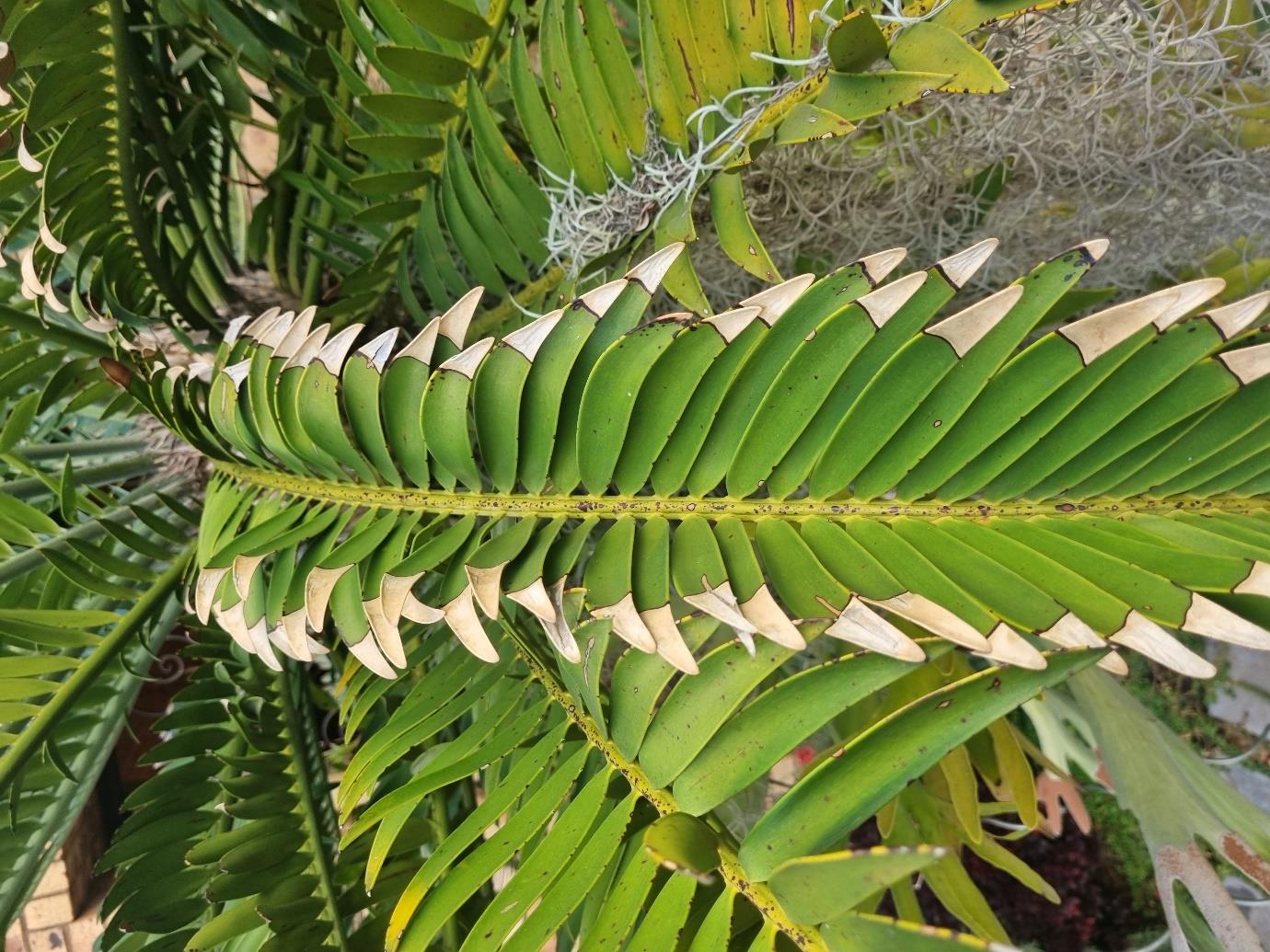
Cold damage can come in various forms. In the case of severe cold, soft and even mature leaves can be completely destroyed overnight. Black frost decimates most species. A lighter frost may only damage certain species. In areas prone to cold nights, it is always a good idea to plant sensitive species close to a wall or any structure that will retain heat. Winter leaves will always develop slower that summer leaves, and will therefore be shorter than previous or subsequent summer flushes.
Generally, species with large leaflets are more susceptible to cold damage. These occur naturally along the South African coast in warmer climates. These include E. ferox, E. natalensis, E. aranarius and the like. Grey-leaf species seem to have intermediate resistance to cold, possibly due to the waxy layer on the leaves. Included here would be E. princeps, E. lehmanii, E. trispinosus and so on. The so-called "fine-leaf species" are most resistant to cold, also occurring in nature in places more inclined to cold weather. These include E. lanatus, E. ghelinckii, E. cycadifolius and E. friderici-guilielmi
Information supplied by Dr A J Cilliers.